
How facial sculpting and intraoral massage can support facial rejuvenation, ease jaw tension, and promote relaxation.
When you think about facial massage, you might imagine a relaxing treatment designed to leave your skin glowing and refreshed. But what if facial massage could also help address the tension you've been carrying in your jaw, temples, and neck?
Buccal Sculpt & Lift Facial Massage brings together the aesthetic benefits of facial massage with therapeutic techniques that address the muscles responsible for chewing, facial expression, and some of our most persistent patterns of tension.
And while buccal massage has recently gained attention as a non-surgical approach to facial rejuvenation, its therapeutic foundations are far from new.
What Is Buccal Massage?
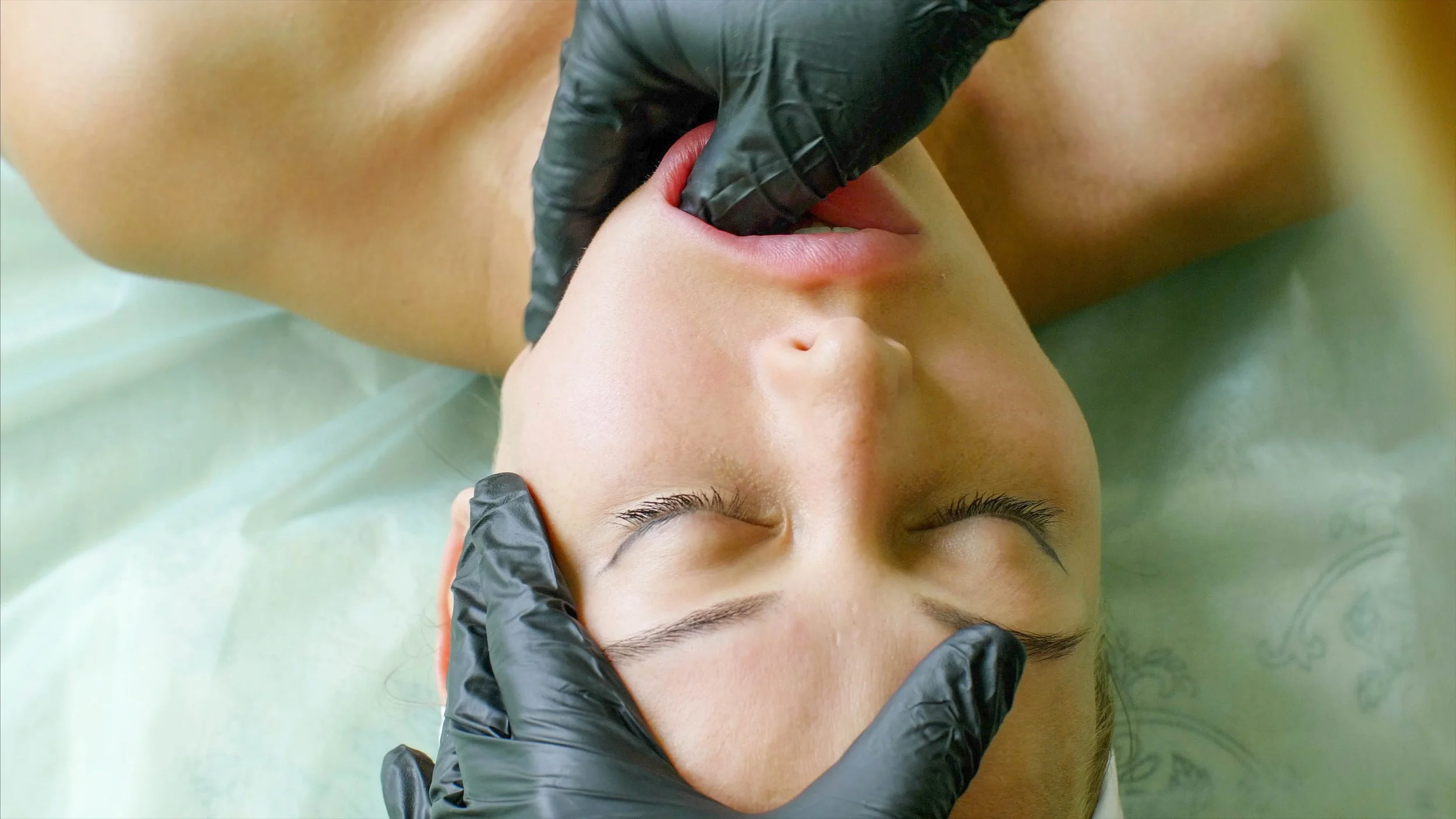
Buccal massage is a specialized facial treatment that incorporates both external facial massage and intraoral techniques, meaning that some of the work takes place inside the mouth.
Using gloved hands, the therapist gently works the muscles of the cheeks and jaw from inside the oral cavity, accessing tissues that are difficult to reach through traditional external massage alone.
The treatment may include myofascial release, gentle stretching, skin rolling, facial cupping, manual lymphatic drainage, and techniques intended to encourage relaxation and tissue mobility.
The goal isn't simply to make the face look different. It's to address how the facial muscles feel, move, and function.
Buccal Massage: An Old Technique Finding a New Audience
First, a little history lesson! The word buccal comes from the Latin bucca, meaning "cheek."
While facial massage has roots in traditional healing practices around the world, the modern sculpting and lifting approach to buccal massage has particularly strong connections to European skincare traditions.
French skincare specialist Joëlle Ciocco is widely credited with pioneering the modern aesthetic approach to intraoral facial massage in the 19080s. Practitioners in Russia and Eastern Europe have also helped develop and popularize sculptural facial massage techniques, including Yakov Gershkovich, whose methods combine external facial sculpting with intraoral work.
Although the treatment may seem like a relatively new beauty trend here in the United States, it's been familiar to many European spa and skincare practitioners for years.
As with so many things, we Americans are a little tardy to the party!
A friend of mine, Mariia, who grew up in Russia, told me that buccal massage was so commonplace there that she was surprised and disappointed when she moved to the United States and struggled to find anyone offering it.
I love that story because it illustrates how something that feels new and innovative in one part of the world can already be a familiar part of wellness culture somewhere else.
Today, buccal massage is finding a growing audience in the United States, where interest in non-invasive facial treatments is bringing renewed attention to the relationship between facial appearance, muscular tension, and overall well-being.
For some clients, the aesthetic benefits are the initial attraction. The experience of releasing long-held muscular tension becomes the reason they return.
More Than Skin Deep: The Potential Benefits of Buccal Massage
Facial Rejuvenation and Sculpting
Our faces are constantly at work. We smile, speak, chew, squint, concentrate, and express emotion throughout the day.
Over time, habitual muscle tension can influence how our faces feel and how we hold our expressions.
Buccal sculpting massage works with these muscles and surrounding soft tissues to encourage relaxation and improve tissue mobility. Some clients notice a softer, more rested appearance, reduced facial puffiness, or a temporary improvement in facial contours following treatment.
Unlike surgical or injectable procedures, facial massage doesn't permanently reposition tissue or change facial anatomy. Instead, it offers a non-invasive approach to facial care that can be incorporated into a regular wellness routine.
Jaw Tension and Temporomandibular Discomfort
One of the most valuable therapeutic applications of intraoral massage is addressing tension in the muscles of mastication—the muscles responsible for chewing and moving the jaw.
Chronic jaw clenching, teeth grinding, and stress-related muscle guarding can contribute to discomfort in the jaw, cheeks, and temples.
Working with these muscles through external and intraoral massage may help reduce muscular tension, improve comfort, and support easier jaw movement.
For people experiencing temporomandibular disorders (TMD), manual therapy may be a useful component of a broader treatment approach.
However, persistent pain, restricted jaw movement, locking, or painful clicking and popping deserve additional evaluation. A physical therapist with specialized training in temporomandibular disorders and intraoral techniques, or an appropriately trained dental professional, can assess problems that extend beyond muscular tension.
Headaches and Referred Neck and Shoulder Discomfort
The muscles of the jaw don't work in isolation.
The temporalis, masseter, and other muscles involved in chewing and facial movement interact with the broader muscular system of the head and neck.
For some people, tension in these tissues contributes to headaches or pain that seems to spread into nearby areas.
By addressing muscular restrictions and tenderness, facial and intraoral massage may help ease certain muscle-related headache symptoms and associated neck discomfort.
Not every headache originates from muscular tension, but for clients whose symptoms are related to clenching or jaw muscle overactivity, this can be an important area to explore.
Sinus Pressure and Facial Congestion
Facial tension and the sensation of sinus pressure can sometimes overlap.
Gentle facial massage and manual lymphatic drainage techniques may help reduce superficial puffiness and provide a sense of relief from facial pressure.
While massage cannot treat a sinus infection or correct an underlying nasal obstruction, some clients find that gentle work around the cheeks, forehead, and jaw leaves their faces feeling lighter and more comfortable.
Releasing Habitual Patterns of Stress
Think about how often you catch yourself clenching your jaw while concentrating, pressing your tongue against your teeth, or holding tension around your eyes.
These habits can become so familiar that we stop noticing them.
One of the more interesting aspects of facial massage is the opportunity to become aware of tension patterns that have been operating in the background.
Through slow, intentional manual therapy, clients may begin to recognize what relaxation in their facial muscles actually feels like.
That awareness can be useful well beyond the treatment room.
How Is Buccal Sculpting Different From Traditional Intraoral Massage?
Intraoral massage is not a new technique. Massage therapists, physical therapists, and other appropriately trained healthcare professionals have used intraoral soft-tissue techniques for years to address jaw muscle dysfunction, restricted movement, and orofacial pain.
Traditional therapeutic intraoral work often focuses on specific muscles or areas of dysfunction. The intraoral portion may last only several minutes, with treatment directed toward a particular concern.
Buccal Sculpting & Lifting Massage takes a more comprehensive approach.
Rather than moving directly into intraoral techniques, much of the session is devoted to preparing the surrounding tissues through external facial massage, manual lymphatic drainage, facial cupping, skin rolling, acupressure, and gentle myofascial techniques, along with focused work on the jaw, scalp, and neck.
This gradual approach allows time for the facial muscles to relax and the tissues to become more receptive to the focused intraoral work that follows.
By the time we begin the intraoral portion, we've already spent considerable time addressing the surrounding musculature and patterns of tension.
The intraoral portion of my 60-minute Buccal Sculpting & Lifting treatment typically lasts about 10–15 minutes. This allows plenty of time for focused work without overworking sensitive tissues.
After all, the goal is to enjoy a relaxing, therapeutic facial massage—not to spend 45 minutes with your mouth open feeling like you're at the dentist's office!
The result is a treatment that combines therapeutic intention with a more relaxing, restorative experience. While traditional intraoral therapy may be primarily clinical and problem-focused, Buccal Sculpting & Lifting Massage offers an opportunity to address muscular tension within a full facial treatment.
The intraoral work is an important part of the experience, but it's the combination of techniques throughout the session that makes the treatment so beneficial.
Why Experience Matters: My Personal and Professional Connection to Buccal Massage
Intraoral massage is a specialized manual therapy technique that requires a thorough understanding of facial anatomy, the muscles of mastication, and the complex relationships between the jaw, head, and neck.
While intraoral techniques have long been part of therapeutic massage education, additional hands-on training allows practitioners to further develop their skills, refine their techniques, and explore different approaches to facial sculpting and muscular tension.
I've been a licensed massage therapist for ten years, and my continuing education has included specialized training in Buccal Sculpting & Lifting Massage, along with myofascial techniques and manual lymphatic drainage.
For me, the growing interest in buccal massage has been particularly exciting because it brings renewed attention to an area of therapeutic massage that has been meaningful in my own life.
I have firsthand experience with temporomandibular joint dysfunction, jaw clenching, and the headaches that can accompany chronic muscular tension.
At one point, my symptoms were considerably more severe than they are today.
Through a combination of targeted exercise and intraoral massage, I've experienced meaningful improvements in my own jaw comfort. I sleep better, experience fewer tension headaches, and have noticed a reduction in nighttime teeth grinding, also known as bruxism.
That personal experience has given me a particular appreciation for the relationship between jaw function, muscular tension, and overall comfort.
It's also one of the reasons I find this work so rewarding.
I understand what it's like to carry persistent tension in the jaw and surrounding muscles, and I appreciate how meaningful even modest improvements can be.
As more people discover buccal massage for its aesthetic benefits, I'm especially pleased to see greater awareness of its therapeutic applications.
Because sometimes the most noticeable change isn't how your face looks. It's how your face feels.
What to Expect During a Buccal Sculpting & Lifting Session With Me
My approach combines the aesthetic elements of facial sculpting with my background in therapeutic massage, manual lymphatic drainage, and myofascial techniques.
A 60-minute session involves much more than intraoral massage.
We begin with external work, allowing time to address the muscles and connective tissues of the face, jaw, neck, and scalp before moving into the intraoral portion.
I use gloves for all intraoral work, and the techniques are performed slowly, with attention to your comfort and individual tolerance.
For clients seeking relief from jaw tension, we may spend additional time addressing the muscles involved in chewing and the surrounding areas of the head and neck.
For those primarily interested in facial rejuvenation, the session can emphasize soft-tissue mobility, relaxation, and facial sculpting.
Both approaches share the same underlying philosophy:
A face that feels more relaxed may also look more relaxed.
Why More Than One Session May Be Beneficial
For many clients, the first Buccal Sculpting & Lifting session is an introduction to what relaxation in the face and jaw can actually feel like.
When you've spent years unconsciously clenching your teeth, tightening your jaw, or holding tension in your facial muscles, that sense of release can feel surprisingly unfamiliar.
But long-established patterns of muscular tension don't necessarily change after a single treatment.
Subsequent sessions provide opportunities to revisit that relaxed state, reinforce awareness of habitual tension patterns, and encourage greater ease and comfort in the facial muscles over time.
I like to think of it as helping your muscles and nervous system become more familiar with a different way of being—one that doesn't involve constantly holding on to unnecessary tension.
While the effects and duration of relief vary from person to person, a series of treatments may be helpful for those seeking to address persistent muscular tension.
For clients dealing with chronic jaw tension, I often recommend beginning with three weekly sessions, then reassessing how you're feeling and whether additional treatment would be beneficial.
The goal isn't to make you dependent on regular massage. It's to help you develop greater awareness of your own tension patterns and support more lasting comfort between sessions.
Is Buccal Massage Right for You?
Whether you're interested in maintaining a refreshed facial appearance, exploring relief from jaw tension, or experiencing a different approach to facial massage, buccal sculpting offers a way to care for the face beyond conventional skincare.
It isn't a replacement for medical or dental treatment when those are needed, and results will vary depending on your individual concerns.
But it can be a valuable addition to a thoughtful, ongoing approach to facial wellness.
Interested in experiencing a Buccal Sculpt & Lift Facial Massage?
I offer specialized 60-minute buccal massage sessions in Colorado Springs, combining facial rejuvenation with advanced massage techniques to help you look and feel your best.
Laura Gehant, LMT, CMLDT
Colorado Springs, Colorado